
In the summer of 2018, Rachael Lainé walked into a small knitwear shop on Guernsey and got distracted by a hat.

The west coast of Guernsey, near Rocquaine, imagined. AI-generated image.
It was a beanie, knitted from leftover yarn and the spare cuffs of guernsey jumpers. She started chatting with the man behind the counter, Neil Sexton, who had been with the business since 1975. She left with a plan to buy the company.
The company was Le Tricoteur. Her family’s history was already in it: it was founded by Robert Macdougall, her second cousin once removed, and her parents first met at his 21st birthday party in 1961. In February 2020, Le Tricoteur became hers.
How it started
In 1963, Robert was a student at Trinity College Dublin on a trip to America, and his hosts couldn’t stop admiring his hand-knitted guernsey. A year later he bought a 40-year-old knitting machine and set it up in an old cobbler’s shop in St Peter Port, with one employee and six hand knitters working from home.
By 1979 there was a purpose-built factory, about 65 staff and around 400 finishers knitting at home. They were making about 100,000 garments a year, and selling about as many.
Then the numbers came apart
Robert stepped back in 1981, and sales stopped keeping pace with production. Fleece was arriving, and the early-80s recession made it worse. He came back to bring the stock down and match making to selling. In 1984 he sold the business.
I’ve spent my working life on that line between what a business makes and what it sells. The product didn’t fail. The guernsey was as good in 1982 as it was in 1979. What broke was the balance. More product than people to wear it will hurt a good maker faster than almost anything.
What the leftovers say
That’s why the beanie matters to me. A business that knits hats from its own spare cuffs knows exactly what it has. The seconds go the same way: bodies and sleeves that didn’t pass come back as bags, hot water bottle covers and laptop cases. Nothing goes to waste, and every piece counts.
Rachael has added a reef knot to the logo, for the fishing heritage and for the knitting itself. The range now runs from the plain guernsey to zipped wool jackets and accessories, and the plain jumpers are still 100% British worsted wool, knitted on a tighter gauge than high-street knitwear, with more wool to the inch to keep out the wind, and made to be repaired.
The last stitches
Here’s the part I can’t stop thinking about.
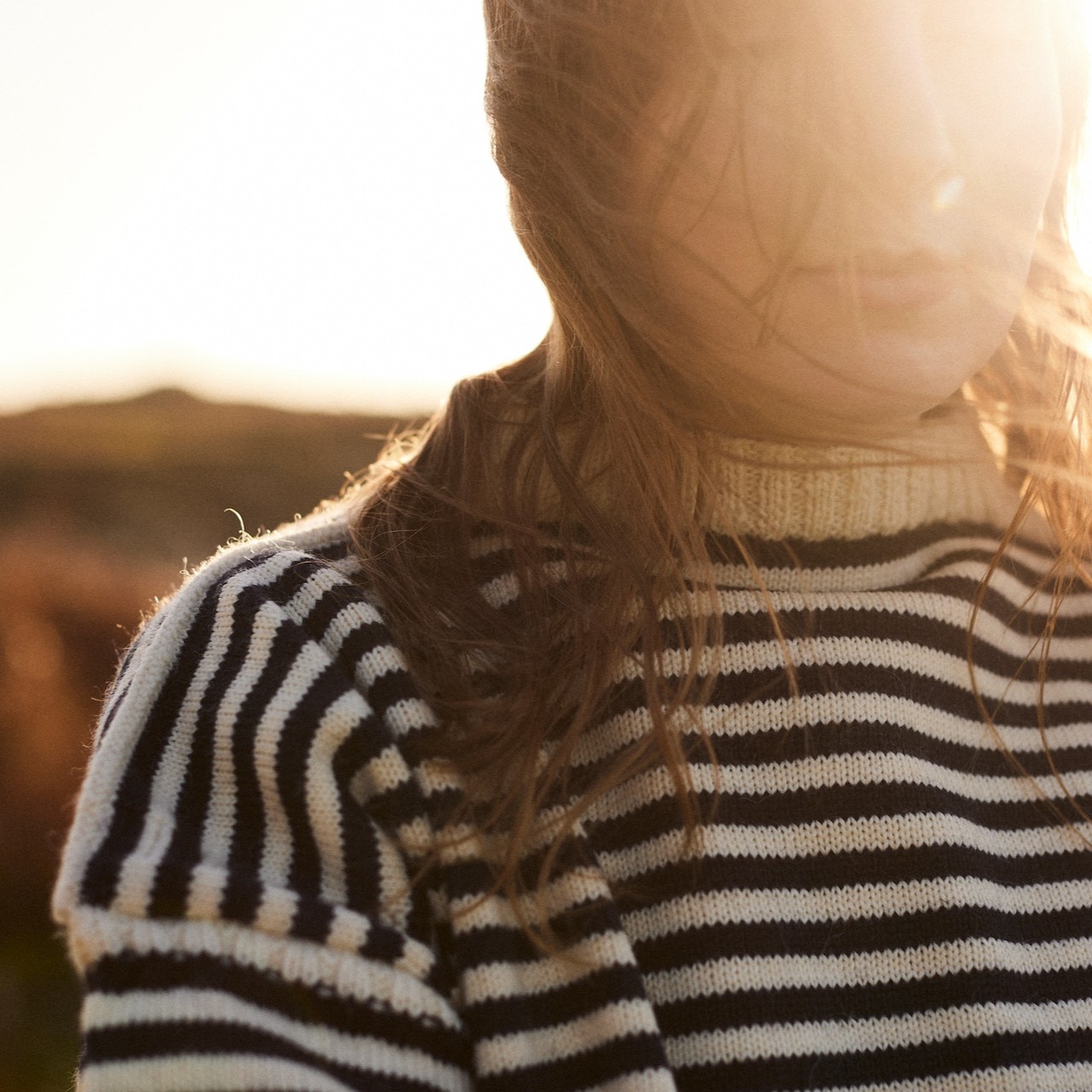
The body and sleeves of every guernsey are knitted on vintage punch-card machines. Then the pieces leave the factory and go home with a knitter, one of a team working from their own houses, who knits the shoulder seams and the neck by hand and changes the stitches to suit the size. It’s the same work the wives, mothers and sweethearts of fishermen did for generations, to keep the wind and rain off the men who went to sea.
I keep coming back to the Sable. It’s a deep autumn brown, and when the light catches it, a warm orange shows through, the colour of a conker.
And the guernsey is made to be turned around. It’s reversible: you wear it front to back, then back to front, so it wears evenly and lasts.
That’s the romance of it for me. It isn’t the history. It’s the hands. A machine knits the body and a person finishes the neck. A family lets the business go, and half a century later a cousin walks in, picks up a hat made from leftovers, and brings it home.
A jumper made to be turned around, from a company that was.
Will
Le Tricoteur’s story, and their #woolmonth2026 film: letricoteur.co



How I write this: every piece starts with something real, a thing I’ve made, a maker I’ve found, a story I want to tell. I use AI as a working partner to shape drafts, check facts against my sources, and tighten the words. I read every line, change what isn’t right, and decide what goes out. Makers’ words and images stay theirs, credited and linked.
