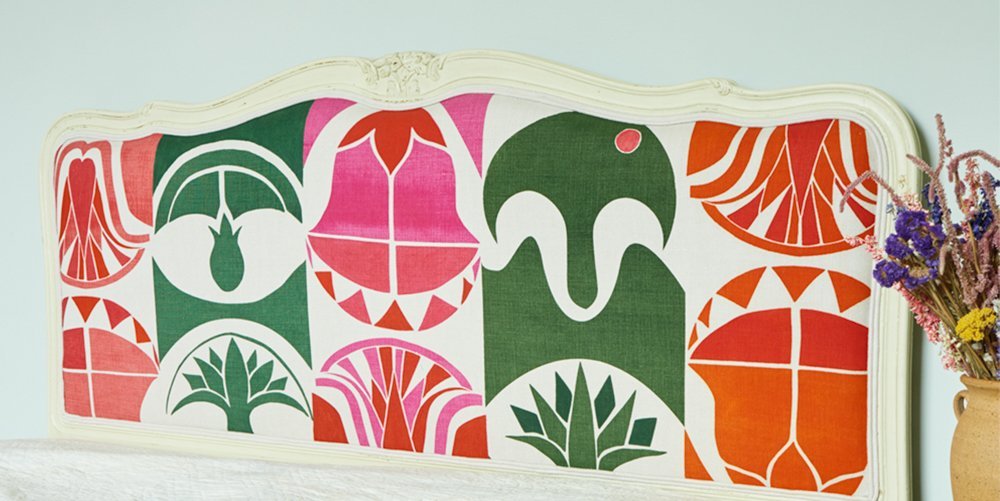
A reel from John Montgomery hypnotized me this week: two cousins, screen printing linen by hand in a converted cattle barn in Somerset. Longtime readers know this is my normal. Textiles and hand craft are the territory I return to again and again, because they are where I started. I watched it twice.
Then I did something without thinking: I sent it straight to Alice Temperley. Alice is from Somerset, and good things continue to come from there. Jessie De Salis and Alice Jacoby are the latest proof.
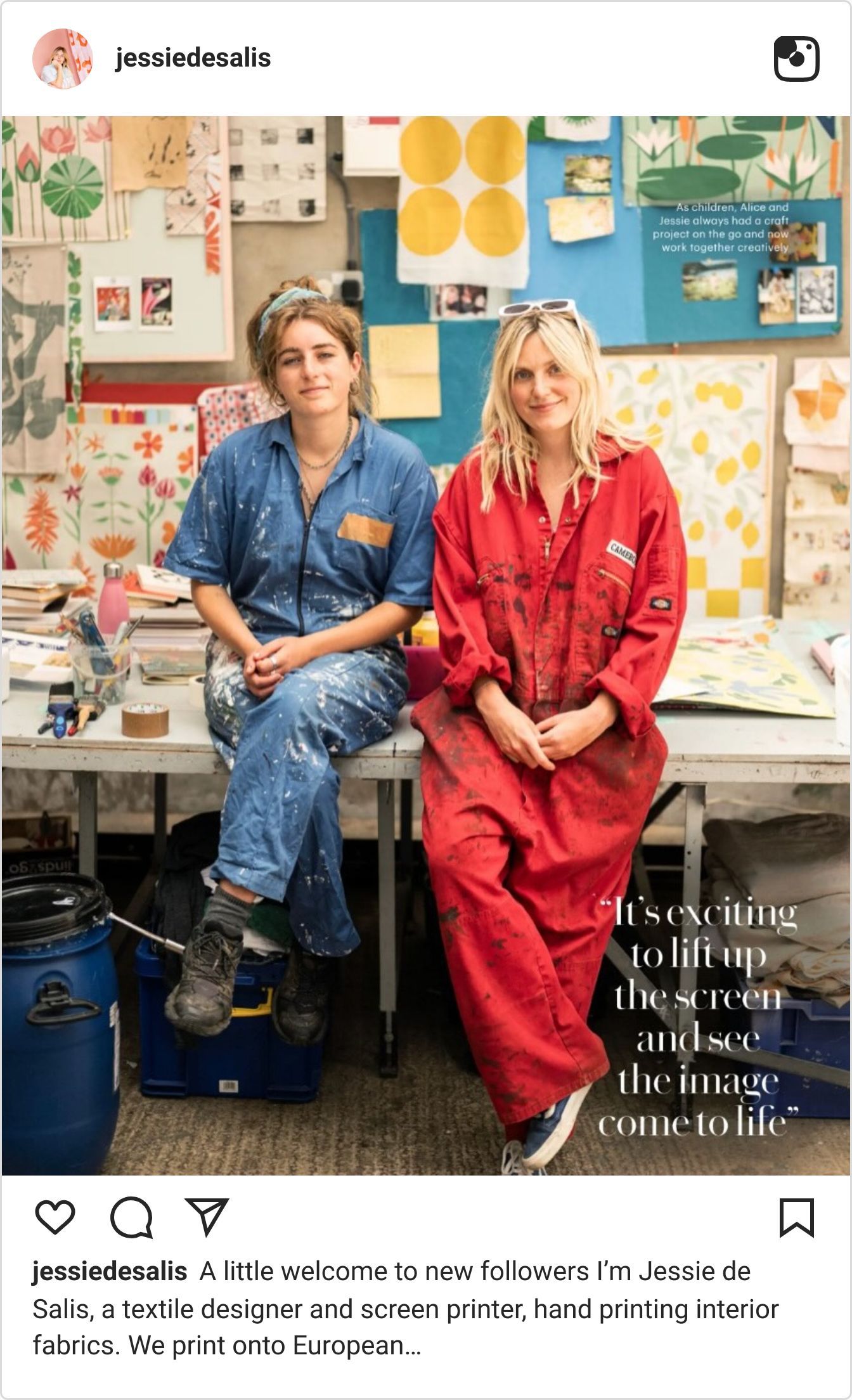
The Studio
What began at a kitchen table during lockdown—Jessie experimenting with a makeshift DIY screen-printing setup in a disused barn near her house—quickly grew too large for the home. Her grandparents, farmers, offered an old stable packed tight with storage. The cousins cleared it out and claimed the light: a glass roof, critical for checking colour alignment, now hangs above the printing tables.
Everything is screen printed by hand, in small batches, using homemade plant-based dyes and organic linen sourced from Europe. Fabrics, blankets, tablecloths, pillows, curtains—and some seriously fabulous lampshades.
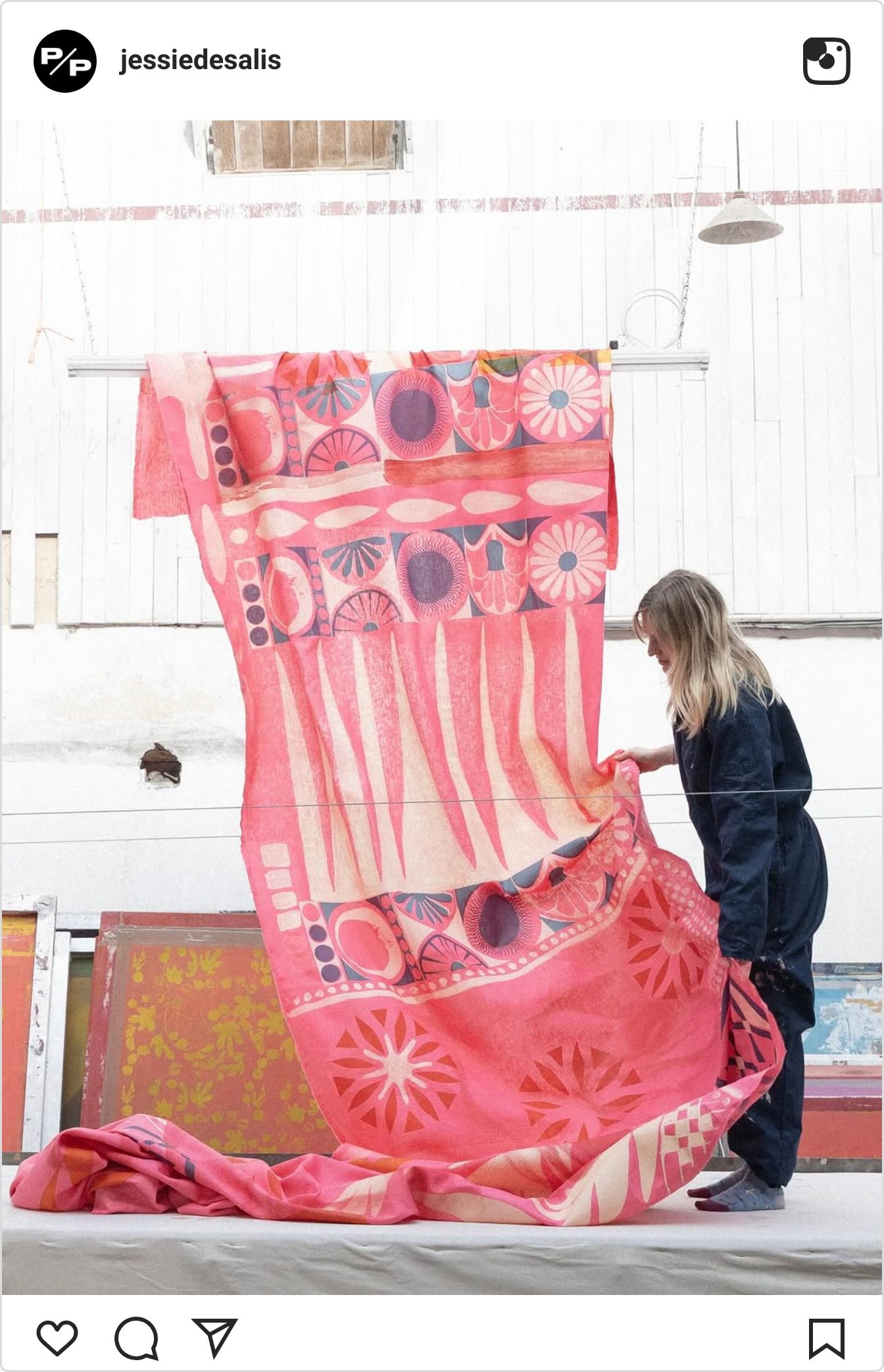
The Two Hands
Jessie is the architect of form. Her hand-cut paper stencils flatten the weeds, leaves, and structural stems growing outside the studio door into bold, repeatable vectors. She has said her design ethos is anchored in the Bauhaus movement, with structural nods to ancient Egyptian, Mesopotamian, and Greek history. She designs with the end product in mind: how a repeating block will fold over the frame of a lampshade, or stack when a curtain is pulled back.
Alice is the alchemist of matter. She handles the mineral pre-treatments, monitors the dye vats, and studies how raw linen fibres absorb different botanical batches. Because natural dyes shift with the season in which they were picked, no two printing runs are ever chemically identical. Every yard carries a literal snapshot of Somerset's soil chemistry.
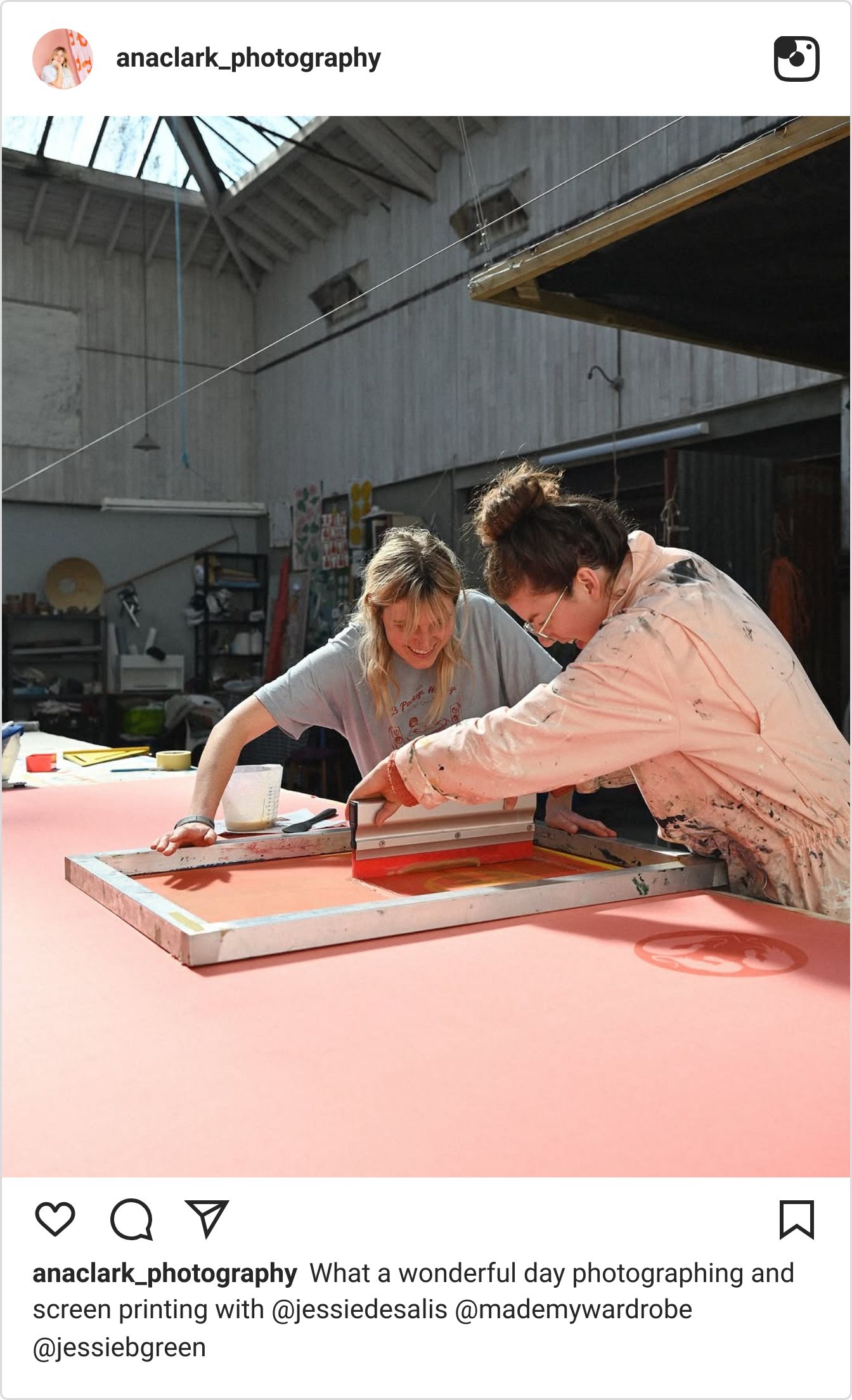
The Lineage
If William Morris walked into this barn, he would recognise it instantly. Morris despaired of synthetic coal-tar dyes—harsh, flat, unnatural—and championed the deep, living colour of vegetable dye. Alice's botanical mordant work honours exactly that obsession. And his definition of art as "man's expression of his joy in labour" is visible in every pull of the squeegee: this is physical, full-body work—roughly two minutes of printing for every twenty minutes of setup.
But where Morris was maximalist—dense, intertwining botanicals that only the wealthy could afford—the cousins filter the same local flora through Bauhaus discipline. Form follows function. Nature is stripped to its cleanest lines. Beauty, made democratic on raw linen.
Why It Matters
The textile industry remains one of the heaviest polluters on earth, built on cheap synthetics and fast-homeware designed for landfill. Jessie and Alice's barn is a working counter-argument: print to order, forage within season, and eliminate overproduction by refusing to force nature to move faster.
And then they open the doors. Their workshops demystify the labour—showing people exactly how much sweat, patience, and resource sit inside a single length of cloth. Once you understand that, you never again ask why it costs what it costs.
The thread of the human story—pressed into linen, one pull at a time.
Jessie de Salis: jessiedesalis.com | Workshops in Somerset
Source: John Montgomery (@thecreativemaestro) on Instagram. Research: Selvedge, Handprinted, People of Print, The Bristol Magazine, Blumenhaus.
Imagery note: any and all illustrative images in this piece were imagined with AI in homage to the heritage print workshop — the real barn, the real hands, and the real cloth are all at jessiedesalis.com.